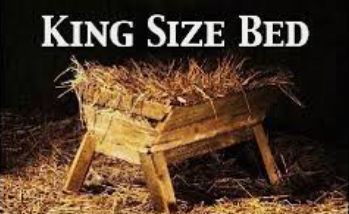
Sometimes we ignore the kingly theme that permeates Christmas. King Herod ordered the massacre of innocents because he feared the birth of a mighty king would challenge his authority. The three kings followed the star from the east to do homage to this baby-king. The OT prophesied a messiah-king would be born in Bethlehem from the descendancy of King David, and His kingdom will have no end. Thirty years after the original Christmas, Jesus began His ministry by declaring: The Kingdom of God is at hand.
Kingdoms are governing bodies with authority and structure. They usually include a king, a queen, and often a prime minister and parliament. In the everlasting kingdom Jesus established (Mk 1:15), the risen Christ is King, the assumed Mary is Queen, the successor of Peter (the pope) is visible prime minister, and the successors of the apostles (the bishops) are the parliament. The latter two make up the Magisterium, i.e. the official teaching authority established by Christ.
Kingdoms also have laws. These include universal declarations in divine Revelation, natural law (both of which are immutable), and canon law. The latter is promulgated by the Church with the authority of Christ, and can be altered by His same authority. All three are authoritatively interpreted by the Magisterium if or when there is confusion. The prime minister and parliament are assured freedom from error by the King when speaking ex cathedra with a solemn definition, or defining a matter of faith or morals via a Church council (extraordinary Magisterium); or when teaching defined doctrine when dispersed around the world (ordinary Magisterium). What benevolent King would allow the necessary means to perfect and everlasting happiness to be corrupted by fallible men, remain ambiguous, or misinterpreted by men who divide into their own denominations? (Jn 17)
The wider kingdom established by God has three tiers, comprised of the saints in heaven, the souls in purgatory, and the Church on earth, thus reflecting the Trinitarian God as being three levels in one Church. These are traditionally referred to as the Church Triumphant, the Church Suffering, and the Church Militant respectively. Since they are in the living body of Christ, citizens of the kingdom in all three levels have access to benefitting from each other’s prayers and sacrifices. It is God’s will that we be secondary causes of each other’s salvation.
When the King, born on Christmas, returns on the last day of history to raise His kingdom on earth to heavenly glory, He will first judge publicly the living and the dead. Many questions may be asked, the most basic of which are whether we followed the laws of the Kingdom. Going over and above the foundational laws is important, but meaningless if one intentionally avoids the basic laws. Our excuses that we lived a life of helping others and caring for our family won’t suffice. As Peter Kreeft often says, the theme song in Hell is Sinatra’s “My Way”. We please God only by doing things His way, not ours (Jn 14:6). Perhaps two of the more basic questions that will be asked pertaining to our times are: Did you meet me in the Eucharist every Sunday as I had commanded you through the Church? and, Did you follow my doctrine on sexual morality – or the world’s? If we then acknowledge our sins, we might be asked: Did you confess them to me through one of my priests in the sacrament of Confession which I established? Three basic, foundational questions.
Christ, the second Person of the Trinity born in the flesh on Christmas day, reigns as King of the universe. Being a part of His Kingdom of Love, with its channels of authority and laws of truth, is up to us.